Coworking 101 - The Corner Coworking

Category: Coworking 101

Essentials for people new to coworking — how memberships work, what’s included, how to evaluate a space, and what to expect on day one.

  • Meeting Rooms 101: What to Look For (And What Most Spaces Get Wrong)

    a guide for anyone who’s lost a meeting to a bad mic, a bad table, or no parking

    The meeting was set for ten. By 10:07 the client was still circling the block looking for parking. By 10:12 the boardroom TV refused to mirror anyone’s laptop. By 10:18 the only working pen had run out, and the whiteboard had last year’s quarterly numbers ghosted on it. By 10:23 the meeting had become about the meeting.

    You only get one of those before you start booking somewhere else.

    A good meeting room does one thing: it disappears. Nobody talks about the AV, the chairs, or the lighting because none of it got in the way. That’s harder than it sounds — and most of the rooms you can book around Cochrane get one or two of those things badly wrong.

    WHAT A MEETING ROOM ACTUALLY NEEDS

    Strip the brochure language away and there are six things. If a room nails these, it’s a good room. If it misses one, you’ll notice. If it misses two, your meeting will.

    • Privacy. A real door, real walls, and no foot traffic past the glass. Anything less and the conversation gets quieter than it should.
    • AV that just works. A camera, a microphone, and a screen that connects to whatever laptop walks in the door. Not “you have to download an app.” Not “let me find the dongle.” Plug in, mirror, go.
    • A real table. Big enough for laptops, notebooks, coffees, and elbows. The wrong table size is one of those things you don’t notice in the photos and never stop noticing in the room.
    • Power at the table. Not three feet from the table. At the table. Battery anxiety is a real thing at the 90-minute mark.
    • A whiteboard or screen you can write on. Even meetings that don’t need it use it once. The good ones use it constantly.
    • Parking and a front door. Your guests should be able to find the room without phoning you. Signage, a host at reception, and parking inside two minutes’ walk.

    a good meeting room disappears. nobody talks about the AV, the chairs, or the lighting — because none of it got in the way.

    WHAT IT ISN’T

    The alternatives all sound reasonable until you try them.

    • It’s not a hotel meeting room. Hotel boardrooms can work, but they’re priced as a full-day buy, the AV is usually a coin flip, and you’re competing with the lobby for parking. Fine for an offsite. Painful for a 90-minute pitch.
    • It’s not the library room. The Cochrane Public Library has free bookable rooms and they’re a real asset — for community groups, study sessions, and meetings where confidentiality isn’t on the table. They’re not built for client work. The booking calendar fills weeks out, and the AV is bring-your-own.
    • It’s not a coffee shop table. You already know. The espresso machine fires up halfway through the most important sentence of the day.
    • It’s not your home office. Some meetings can be Zoom from the basement. Most client-facing ones can’t. The first time a kid wanders in behind you on a sales call, you’ll book a real room for the next one.

    WHAT MOST SPACES GET WRONG

    Four failure modes, in roughly the order they ruin meetings:

    • AV theatre. The room has a TV, a camera, and a microphone, but they don’t talk to each other. You spend the first ten minutes troubleshooting on speaker. By the time it works, everyone has decided it’s a hassle to come back.
    • No host. You arrive, the room is locked, nobody is at the desk, and your guest is already there. Booking software is not the same thing as a host.
    • Bad lighting. Overhead fluorescents make you look terrible on Zoom, and they make people feel tired by minute thirty. The difference between a meeting that finishes early and one that drags is sometimes just the lighting.
    • No coffee and no washroom nearby. Sounds trivial. Isn’t.

    WHAT’S INCLUDED AT THE CORNER

    Two purpose-built boardrooms and a day office, depending on what you’re walking into.

    the boardroom at 225 railway st e

    Main floor, staffed reception, free parking out front. Seats six to eight around the table; up to fifteen in rows for a workshop.

    • Zoom-ready: USB camera and mic/speaker that work the first time, every time
    • TV with Apple TV mirroring
    • Whiteboard with working pens
    • In-table 110V and USB power
    • Coffee, washroom, and member kitchen on the same floor
    • Mon–Fri, 8:00 AM – 6:00 PM, max 8 hours
    • $40/hour + GST

    the boardroom at 250 charlesworth ave

    Newer build, modern finish, seats seven to nine comfortably around the table. Available around the clock.

    • Zoom-ready: USB camera and mic/speaker
    • TV with AirPlay mirroring
    • Whiteboard
    • In-table 110V and USB power
    • Available 24/7
    • $45/hour + GST

    the day office

    Smaller, quieter, built for one-on-ones, interviews, deposition-style calls, or a focused half-day when the home setup isn’t going to cut it. Door closes, light is good, the AV travels.

    WHEN TO BOOK A ROOM INSTEAD OF DIALING IN

    Not every meeting belongs in a real room. Plenty of them are fine on a Zoom from the kitchen. The ones that aren’t tend to share a few features.

    • The client is meeting you for the first time. First impressions are cheap when the room does the work for you.
    • More than three people are dialing in. The economics of a good boardroom mic against three laptops echoing at each other are on your side.
    • You’re interviewing or hiring. Candidates remember the room. So do they when they tell their friends whether to apply.
    • You need a whiteboard. Strategy sessions on a Google Doc are a third of the meeting they could be.
    • You need to focus for two hours and your house won’t let you. The boardroom doubles as a day office on a quiet week.

    AN ILLUSTRATIVE COMPARISON — COCHRANE EDITION

    Numbers based on current Cochrane and nearby Calgary listings for hotel meeting rooms, public bookable rooms, and a coworking boardroom. As always, the headline rate isn’t the whole story.

    Two-hour meetingCoffee shop tableLibrary bookable roomHotel meeting roomThe Corner boardroom
    Base cost$0$0$200 – $400$80 (Railway) / $90 (Charlesworth)
    PrivacyNoneSomeGoodGood
    AV that just worksBYOBYOSometimesIncluded
    WhiteboardNoSometimesUsuallyIncluded
    Power at the tableMaybeSometimesUsuallyIncluded
    Coffee / washroomYesDown the hallYes (paid)Included
    Booking lead timen/a1–4 weeksDaysHours
    Host at the doorNoNoSometimesIncluded (Railway, weekdays)
    True cost for client-facing meetingFree, but loses you the dealFree, but limited$200+$80 – $90
    Illustrative only, based on current Cochrane and Calgary listings (June 2026). The library is a real option for many meetings; we list it honestly. Hotel rooms are usually priced as half-day blocks. Replace with your own quotes.

    THINGS THAT DON’T SHOW UP ON A SPREADSHEET

    the first three minutes

    A good room is your warm-up. Your guest walks in, gets greeted, finds the room without phoning you, and sits down to a working AV setup. By minute three you’ve earned a meeting that’s about the meeting.

    a host who notices

    Someone at reception means the second coffee gets brought in without you asking, the running-late guest gets shown the way, and the meeting that’s about to go fifteen minutes long doesn’t bump into the next one.

    the room as a frame

    A boardroom you hold a meeting in is also a boardroom your client remembers holding the meeting in. The room is part of the pitch whether you wanted it to be or not.

    HOW TO PICK THE RIGHT ROOM

    Five honest questions, before you book anything:

    • How many people are in the room, and how many on Zoom?
    • Is this client-facing or internal?
    • Are you presenting on a screen, working a whiteboard, or just talking?
    • Are guests driving in, and where will they park?
    • What’s the cost of the meeting going sideways because the AV didn’t work?

    If the last answer is “more than $40 an hour,” book a real room.


    BOOK A ROOM

    Hourly, by the half-day, or as a recurring weekly slot. Tour the room first if it’s a meeting you can’t afford to get wrong.

    See the rooms and book a time →


    Coworking 101

    Curious how the same total-cost math plays out for office space and warehouse? Same framing, different building.
    Understanding Total Cost of Occupancy →

  • Working From Home With the Kids Home? The Case for a Desk of Your Own

    Working From Home With the Kids Home? The Case for a Desk of Your Own

    why a single month of coworking can reset your whole summer

    School lets out and the house fills up. The kitchen table you used as a desk is suddenly contested territory. Your 10 a.m. call has a soundtrack — a sibling argument, a request for snacks, the dog losing its mind at the mail carrier. You love having them home. You also have a deadline at noon.

    Working from home with kids home is a particular kind of hard. It was already a juggling act; summer quietly removes the six predictable hours you used to build your day around. By August, plenty of people who happily work from home the rest of the year are coming a little undone.

    Here’s the case for doing something about it — not forever, just for a season — and why giving it a single month is the move that actually sticks.

    THE PROBLEM ISN’T THE KIDS — IT’S THE MISSING DOOR

    It’s tempting to file this under “kid problem.” It isn’t. The real issue is that working from home erases the line between home and work, and kids just make that erased line impossible to ignore. There’s nowhere in the house that is only for working, and no moment that is clearly off the clock.

    What you’re missing isn’t silence — you can buy headphones. It’s a door: somewhere that exists for work, that you arrive at and, just as importantly, leave at the end of the day.

    what you’re missing isn’t quiet. it’s a door.

    WHAT CHANGES WHEN YOU HAVE SOMEWHERE TO GO

    A desk that isn’t in your house changes more than your noise level.

    • Focus you can’t manufacture at home. Two uninterrupted hours are worth more than a fractured eight.
    • A real boundary. Home gets to be home again — for you, and for the kids, who don’t have to tiptoe past “Dad’s on a call.”
    • Other adults. A two-o’clock conversation that isn’t about snacks does something for your week you don’t notice until you have it back.
    • An actual end to the day. When work has a place, it also has an off switch. You go home at five and you’re home.

    WHY A MONTH

    A drop-in day here and there scratches the itch but never changes the pattern. A month does. A month is long enough to find your rhythm — which mornings you come in, where you like to sit, how much you get through before lunch — and long enough for “going in to work” to stop feeling like an outing and start feeling like your routine.

    That’s the whole idea behind a discounted first month: long enough to build the habit, not a year-long commitment to find out whether it fits. The habit is the point. Once it’s yours, the summer gets a lot more manageable — and so does the rest of the year.

    IT’S NOT ALL OR NOTHING

    You’re not giving up working from home. Most people land on a couple of days a week — in for the mornings that need real focus, home for the afternoons, the sick days, and the deep-work stretches where you want nobody around. Summer just tilts the balance: a few more days out of the house while the house is full, a few more at home come September.

    A SUMMER-SHAPED RHYTHM

    There’s no correct amount. A few shapes that work:

    • Three mornings a week, home by lunch for camp pickup.
    • Your two heaviest deadline days, start to finish, somewhere quiet.
    • Every day for the first two weeks, until the new normal sets in — then ease off.

    Pick the one that builds the habit, and adjust from there.


    GIVE IT A MONTH

    The honest test isn’t a spreadsheet — it’s a few weeks of actually doing it. Try a discounted first month, build the habit while the kids are home, and see what it does to your summer.

    Find your corner this summer →


    Coworking 101

    Curious how the numbers shake out the rest of the year? Here’s the full cost picture for working from home versus working from a desk of your own.

    Understanding Total Cost of Occupancy →

  • What Is Co-Warehousing? (And Who Actually Needs It?)

    What Is Co-Warehousing? (And Who Actually Needs It?)

    a guide for small-business owners who’ve outgrown the garage

    There’s a moment most successful small businesses hit somewhere between year one and year three. The cars don’t fit in the garage anymore. The spouse has opinions about the boxes stacked in the dining room. Your courier driver has started leaving “we couldn’t deliver” tags because residential addresses make their schedule awkward.

    The business is working. The setup isn’t.

    If that sounds familiar, the category you’re looking for is called co-warehousing — and most people in Cochrane have never heard of it.

    WHAT IS CO-WAREHOUSING?

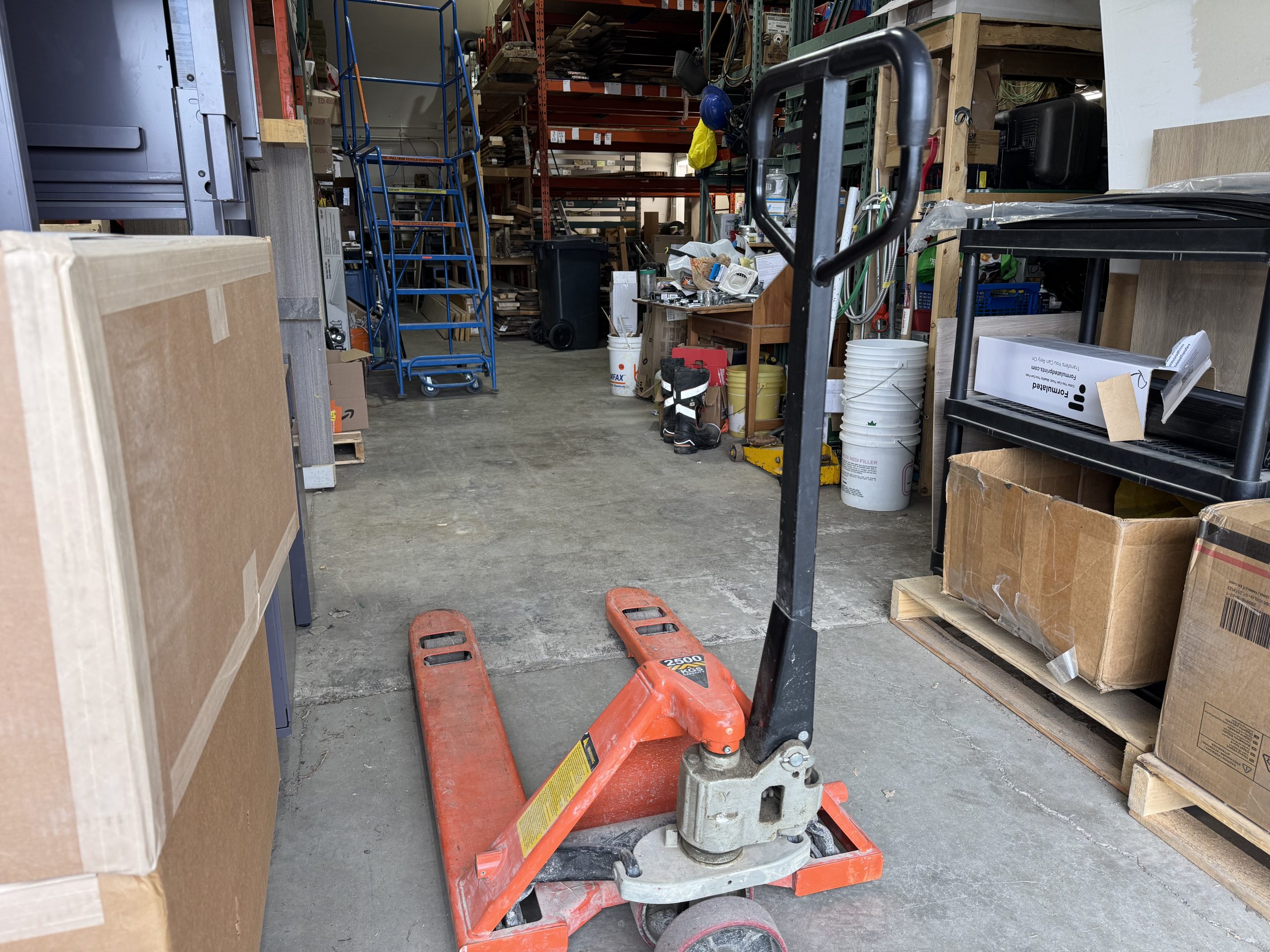
    Co-warehousing is the same idea as coworking, but for physical goods instead of laptops. Several small businesses share one industrial-scale space, and the building handles the parts that don’t make sense to own on your own — loading access, package receiving, a shipping station, common gear. Each business gets dedicated space on the pallet racks (and floor space where it makes sense) for their own inventory, and everyone shares the rest.

    You walk in with your boxes, scan and ship a few orders, restock from the pallet that arrived this morning, and head back to whatever the rest of your day looks like. The space takes care of the things underneath: insurance on the building, security, loading door, waste and recycling, fast and secure Wi-Fi, printing and scanning, kitchen, washroom, address.

    It’s a real category — just one that hasn’t trickled into small-town Alberta yet. The Corner runs the only co-warehouse in Cochrane.

    a coworking space for physical goods — shared receiving, shared shipping, your space on the racks.

    WHAT IT ISN’T

    It’s worth being clear about what co-warehousing is not, because the alternatives all look similar from the outside.

    • It’s not self-storage. A self-storage unit is a locked box. Most facilities won’t sign for a package on your behalf, won’t let you run a business address out of the unit, and cap your access hours. Co-warehousing is built for businesses that need their stuff to move, not just sit.
    • It’s not a small industrial lease. A 600 sq ft Cochrane industrial unit will run you a multi-year lease, triple-net charges, your own insurance, your own security, your own loading door, and a deposit big enough to feel. Co-warehousing trades the commitment for a monthly fee and shared overhead.
    • It’s not a 3PL. A third-party logistics provider picks and packs orders for you. That’s a different product for a different stage. Co-warehousing keeps you in control of your inventory — your hands on your boxes, your eyes on your stock — without the burden of running the whole building.

    WHO IT’S FOR

    Four kinds of business tend to fit the model.

    • The e-commerce seller shipping twenty-plus packages a week from home. The kitchen table works until it doesn’t. Co-warehousing gives you a shipping station, a receiving address, and a place to keep inventory off the kids’ Lego.
    • The importer or distributor holding a container or two of stock. The basement isn’t heated. The driveway looks suspicious when a 53-foot trailer pulls up.
    • The contractor or tradesperson rotating materials across a project pipeline. Right now your inventory lives across three sheds, a buddy’s farm, and the bed of your truck. Co-warehousing consolidates the gear without locking you into a yard.
    • The seasonal small business scaling inventory up for Christmas and down for February. A traditional lease punishes the slow months. Flexible pallet space matches the cash flow.

    WHAT’S INCLUDED AT THE CORNER

    A practical list, written for someone who has never been on the warehouse side of the building:

    • Dedicated space on the pallet racks, sized to your operation — plus floor space where it makes sense
    • Loading door access during business hours
    • A shipping station with scale, label printer, and supplies
    • Package and pallet receiving — couriers leave it at our reception, you pick up on your schedule
    • A real street address (225 Railway St E) you can use on supplier accounts, shipping labels, and websites — backed by our virtual mailbox service, with staff signing for packages and notifying you when something arrives
    • Heat, power, lighting, and fast, secure Wi-Fi
    • Printing, copying, and scanning
    • Kitchen and washroom access — same building as the coworking floor
    • Insurance on the building (you still want a policy on your inventory, but you’re not insuring the structure)

    WHEN TO MAKE THE MOVE

    A few signs you’re past the garage stage:

    • You apologize to your family about the boxes more than once a week
    • A supplier has refused to deliver to a residential address
    • You’ve driven to your self-storage unit more than twice this month
    • Your home insurance has started asking what, exactly, is in the garage
    • You’re losing track of inventory because it lives in three places
    • You’ve turned down business because you couldn’t fit the order anywhere

    You don’t need to hit all six. Two is usually enough.

    AN ILLUSTRATIVE COMPARISON — COCHRANE EDITION

    Numbers based on current Cochrane listings for self-storage, co-warehousing, and small industrial leases. As with any total-cost exercise, the headline rate isn’t the whole story.

    Annual line item10×20 self-storageCo-warehouse at The Corner600 sq ft industrial lease
    Base cost$3,600Included in membership$9,000
    Operating costs / utilitiesHeating extraIncluded$2,400
    ReceivingNot allowedIncludedYou do it
    Shipping stationYou bring itIncluded$500 (gear)
    Heated, year-round accessSometimes extraIncludedIncluded
    Commitment lengthMonth-to-monthMonth-to-month3–5 years
    Address for business useNot allowedIncludedYes
    Approximate annual cost$3,600+$4,800 – $7,200$11,900+
    Illustrative only, based on Cochrane listings (April 2026). Self-storage is the cheapest line item but pays nothing toward the rest of the business — receiving, shipping, address, courier-grade hours. A small industrial lease gives you everything, but you’re carrying it alone, and you’re betting on your business looking the same in three years. Replace with your own quotes.

    THINGS THAT DON’T SHOW UP ON A SPREADSHEET

    proximity

    If you also use The Corner’s coworking floor, the office side and the warehouse side of your business are in the same building. You answer emails in the morning, walk thirty feet to ship the day’s orders in the afternoon, and you’re home by five.

    a second opinion

    Whoever you would have asked for help — the friend who’s been doing Etsy for five years, the guy who imports car parts — they’ve already solved the problem you’re stuck on. They might be working ten feet away from you on the warehouse floor.

    flexibility

    Christmas is busy. February is not. Your space scales to your operation in a way a lease cannot.

    HOW TO KNOW IF IT’S THE RIGHT FIT

    Five honest questions:

    • How many shipments are you sending in a typical week?
    • How much footprint does your inventory actually take?
    • How many times a month does a courier come to your house?
    • Where do you expect to be in six months?
    • If your business shrinks in twelve months, what does your lease cost you?

    If the answers point to “growing, often, more than I’d like, somewhere bigger, more than I’d want,” it’s worth a conversation.


    COME SEE IT

    A walk-through takes ten minutes and tells you more than this article will. Bring a measuring tape if you’ve got one, or just bring a coffee and a few questions.

    Book a walk-through of the warehouse →


    Coworking 101

    Curious how the same total-cost math plays out for office space? Same framing, different building.

    Understanding Total Cost of Occupancy →

  • Understanding Total Cost of Occupancy

    Understanding Total Cost of Occupancy

    why coworking can be more affordable than you think

    A quick tip of the hat: this post was inspired by a great article from the team at Flywheel Coworking. We’ve reworked the framing for our members here in Cochrane, but the credit for pointing us at Total Cost of Occupancy as the right way to think about this belongs with them.

    When people price out office space for the first time, they usually look at one number: the monthly rent. It’s the easiest figure to compare, and on paper a small sublease down the street can look cheaper than a desk at a coworking space. But rent is only the top line. By the time you add utilities, internet, cleaning, furniture, coffee, and the cost of the lease itself, the real number looks very different.

    The way commercial real estate folks deal with this is a metric called Total Cost of Occupancy — or TCO. It’s worth understanding before you sign anything.

    WHAT IS TOTAL COST OF OCCUPANCY?

    TCO is the full annual cost of being in a space — not just the rent, but everything you have to spend to actually sit down and get work done. That includes the obvious line items (utilities, internet, insurance) and the ones people tend to forget (furniture, coffee service, meeting-room rentals, the hours you spend managing it all).

    the sticker price on a lease almost never matches the real cost of occupying the space. TCO is how you compare apples to apples.

    WHAT HIDES INSIDE A TRADITIONAL LEASE

    A typical small-business sublease or direct lease is priced per square foot, and that headline rate rarely includes what you actually need to operate. Expect to layer on:

    • Operating costs — utilities, HVAC, property taxes, building maintenance, snow removal, and common-area fees. On many leases these are passed through on top of base rent.
    • Internet and phones — business-grade connection, setup fees, equipment, and a monthly bill that doesn’t care whether you’re using 10% or 100% of it.
    • Furniture and build-out — desks, chairs, meeting tables, a reception area, and any walls or finishes you need. Even a modest fit-out adds up fast, and most of it stays with the landlord when you leave.
    • Cleaning and supplies — a cleaner on contract, paper products, coffee, kitchen stocking, recycling.
    • Reception and admin — greeting visitors, accepting couriers, managing vendors, and being the person who waits for the internet technician.
    • Commitment risk — most commercial leases run 3 to 5 years. If the team grows, shrinks, or the plan changes, you’re still on the hook.

    WHAT A COWORKING MEMBERSHIP ALREADY INCLUDES

    A coworking membership at The Corner bundles the operating costs of a modern office into a single monthly fee. Instead of assembling the pieces yourself, you walk in and they’re already there:

    • Heat, power, water, and high-speed business internet
    • Furnished desks, meeting rooms, and lounges
    • Coffee, tea, and a stocked kitchen
    • Printing, mail handling, and package receiving
    • Professional cleaning and daily reset
    • A front door in a walkable Cochrane location — with parking you don’t have to shovel
    • Month-to-month flexibility, so the space can scale with you

    You’re not paying for square footage you don’t use. You’re paying for the time you spend working.

    AN ILLUSTRATIVE COMPARISON — COCHRANE EDITION

    Based on recent Cochrane commercial listings, a small 300 sq ft professional sublease typically runs around $25/sq ft/year for the base rent, with operating costs layered on top. Prime or fully-serviced units list higher — closer to $44/sq ft ($1,100/month) — while basic industrial-adjacent space can run as low as $12/sq ft. The numbers below use the mid-range, non-serviced scenario for a two-person business.

    Annual line itemSmall Cochrane sublease (300 sq ft)Coworking at The Corner
    Base rent (@ $25/sq ft)$7,500Included in membership
    Operating costs / utilities$2,400Included
    Business internet$1,200Included
    Furniture (amortized 5 yrs)$1,500Included
    Cleaning & supplies$1,800Included
    Coffee & kitchen$900Included
    Meeting-room access$600 (external bookings)Included hours
    Coworking membership$6,000 – $9,000
    Approximate annual TCO$15,900$6,000 – $9,000
    Illustrative only, based on Cochrane commercial listings (Realtor.ca, April 2026). Serviced or prime-location units list higher. Replace with your own quotes — but be sure you’re comparing the full annual number on both sides, not just the rent line.

    THINGS THAT DON’T SHOW UP ON A SPREADSHEET

    flexibility

    A five-year lease is a five-year bet on your own plans. Month-to-month memberships let you add seats when a project ramps, scale back when it winds down, and keep your options open when the market shifts. For most small teams that flexibility is worth real money — you just don’t see it on the invoice.

    time and attention

    Every hour you spend managing a lease, a cleaner, a landlord, or a cranky printer is an hour you’re not spending on the work that pays the bills. Coworking outsources the building so you can focus on the business.

    the room around you

    You can’t line-item a hallway conversation with another founder, a lunch recommendation from a member, or a last-minute referral. But those are the things our members tell us matter most — and they come standard with a seat at The Corner.

    HOW TO RUN THE NUMBERS ON YOUR OWN

    If you’re weighing a lease against a coworking membership, write both options out on one page and include every line it takes to actually operate. Then compare the totals, not the headlines. A few prompts:

    • What’s the base rent, plus operating costs, plus taxes on the lease option?
    • What will utilities, internet, and insurance cost for a year?
    • What furniture and build-out do you need on day one? Amortize it.
    • How many meeting-room hours per month do you actually use?
    • What’s the cost of your time managing it all?
    • What happens if your team size changes in the next 12 months?

    Once you run that math, the comparison usually looks very different than it did at first glance.


    COME SEE THE SPACE

    The best way to price out coworking is to spend a day in one. Book a free day pass, bring your laptop, and see how the numbers feel in practice.

    Book a free day pass →


    With thanks to Flywheel Coworking for the original article that inspired this post. Their team has been doing great work in the coworking space, and we appreciate the framing they brought to this conversation.