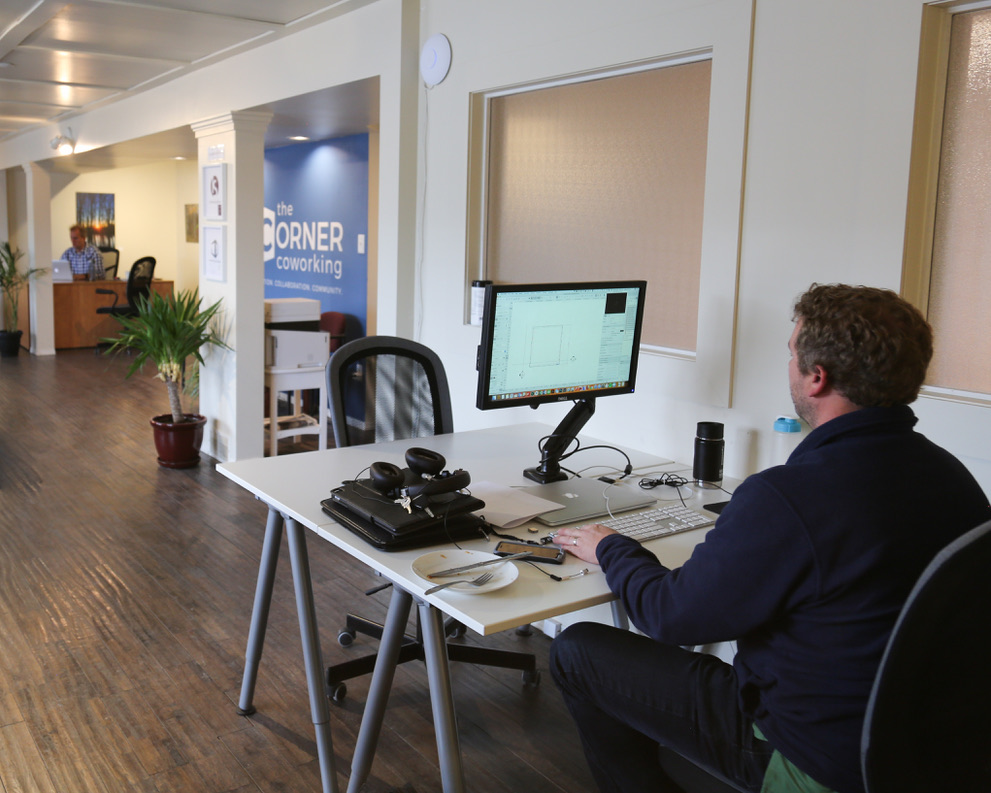
a guide for anyone who’s lost a meeting to a bad mic, a bad table, or no parking
The meeting was set for ten. By 10:07 the client was still circling the block looking for parking. By 10:12 the boardroom TV refused to mirror anyone’s laptop. By 10:18 the only working pen had run out, and the whiteboard had last year’s quarterly numbers ghosted on it. By 10:23 the meeting had become about the meeting.
You only get one of those before you start booking somewhere else.
A good meeting room does one thing: it disappears. Nobody talks about the AV, the chairs, or the lighting because none of it got in the way. That’s harder than it sounds — and most of the rooms you can book around Cochrane get one or two of those things badly wrong.
WHAT A MEETING ROOM ACTUALLY NEEDS
Strip the brochure language away and there are six things. If a room nails these, it’s a good room. If it misses one, you’ll notice. If it misses two, your meeting will.
- Privacy. A real door, real walls, and no foot traffic past the glass. Anything less and the conversation gets quieter than it should.
- AV that just works. A camera, a microphone, and a screen that connects to whatever laptop walks in the door. Not “you have to download an app.” Not “let me find the dongle.” Plug in, mirror, go.
- A real table. Big enough for laptops, notebooks, coffees, and elbows. The wrong table size is one of those things you don’t notice in the photos and never stop noticing in the room.
- Power at the table. Not three feet from the table. At the table. Battery anxiety is a real thing at the 90-minute mark.
- A whiteboard or screen you can write on. Even meetings that don’t need it use it once. The good ones use it constantly.
- Parking and a front door. Your guests should be able to find the room without phoning you. Signage, a host at reception, and parking inside two minutes’ walk.
a good meeting room disappears. nobody talks about the AV, the chairs, or the lighting — because none of it got in the way.
WHAT IT ISN’T
The alternatives all sound reasonable until you try them.
- It’s not a hotel meeting room. Hotel boardrooms can work, but they’re priced as a full-day buy, the AV is usually a coin flip, and you’re competing with the lobby for parking. Fine for an offsite. Painful for a 90-minute pitch.
- It’s not the library room. The Cochrane Public Library has free bookable rooms and they’re a real asset — for community groups, study sessions, and meetings where confidentiality isn’t on the table. They’re not built for client work. The booking calendar fills weeks out, and the AV is bring-your-own.
- It’s not a coffee shop table. You already know. The espresso machine fires up halfway through the most important sentence of the day.
- It’s not your home office. Some meetings can be Zoom from the basement. Most client-facing ones can’t. The first time a kid wanders in behind you on a sales call, you’ll book a real room for the next one.
WHAT MOST SPACES GET WRONG
Four failure modes, in roughly the order they ruin meetings:
- AV theatre. The room has a TV, a camera, and a microphone, but they don’t talk to each other. You spend the first ten minutes troubleshooting on speaker. By the time it works, everyone has decided it’s a hassle to come back.
- No host. You arrive, the room is locked, nobody is at the desk, and your guest is already there. Booking software is not the same thing as a host.
- Bad lighting. Overhead fluorescents make you look terrible on Zoom, and they make people feel tired by minute thirty. The difference between a meeting that finishes early and one that drags is sometimes just the lighting.
- No coffee and no washroom nearby. Sounds trivial. Isn’t.
WHAT’S INCLUDED AT THE CORNER
Two purpose-built boardrooms and a day office, depending on what you’re walking into.
the boardroom at 225 railway st e
Main floor, staffed reception, free parking out front. Seats six to eight around the table; up to fifteen in rows for a workshop.
- Zoom-ready: USB camera and mic/speaker that work the first time, every time
- TV with Apple TV mirroring
- Whiteboard with working pens
- In-table 110V and USB power
- Coffee, washroom, and member kitchen on the same floor
- Mon–Fri, 8:00 AM – 6:00 PM, max 8 hours
- $40/hour + GST
the boardroom at 250 charlesworth ave
Newer build, modern finish, seats seven to nine comfortably around the table. Available around the clock.
- Zoom-ready: USB camera and mic/speaker
- TV with AirPlay mirroring
- Whiteboard
- In-table 110V and USB power
- Available 24/7
- $45/hour + GST
the day office
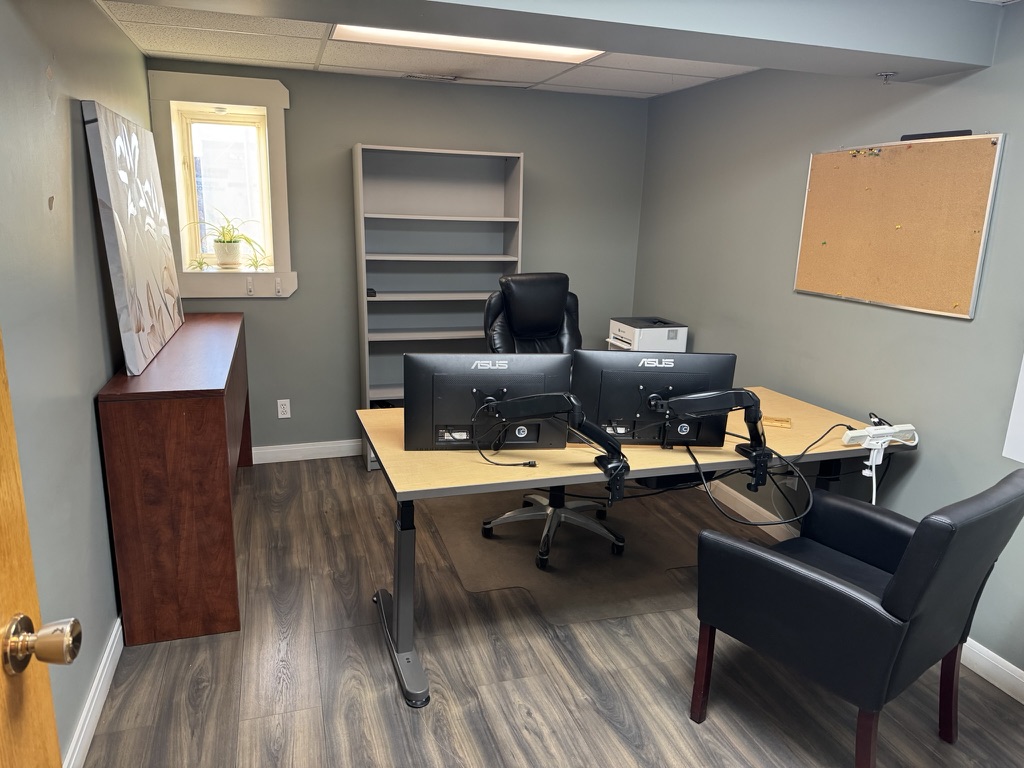
Smaller, quieter, built for one-on-ones, interviews, deposition-style calls, or a focused half-day when the home setup isn’t going to cut it. Door closes, light is good, the AV travels.
WHEN TO BOOK A ROOM INSTEAD OF DIALING IN
Not every meeting belongs in a real room. Plenty of them are fine on a Zoom from the kitchen. The ones that aren’t tend to share a few features.
- The client is meeting you for the first time. First impressions are cheap when the room does the work for you.
- More than three people are dialing in. The economics of a good boardroom mic against three laptops echoing at each other are on your side.
- You’re interviewing or hiring. Candidates remember the room. So do they when they tell their friends whether to apply.
- You need a whiteboard. Strategy sessions on a Google Doc are a third of the meeting they could be.
- You need to focus for two hours and your house won’t let you. The boardroom doubles as a day office on a quiet week.
AN ILLUSTRATIVE COMPARISON — COCHRANE EDITION
Numbers based on current Cochrane and nearby Calgary listings for hotel meeting rooms, public bookable rooms, and a coworking boardroom. As always, the headline rate isn’t the whole story.
| Two-hour meeting | Coffee shop table | Library bookable room | Hotel meeting room | The Corner boardroom |
|---|---|---|---|---|
| Base cost | $0 | $0 | $200 – $400 | $80 (Railway) / $90 (Charlesworth) |
| Privacy | None | Some | Good | Good |
| AV that just works | BYO | BYO | Sometimes | Included |
| Whiteboard | No | Sometimes | Usually | Included |
| Power at the table | Maybe | Sometimes | Usually | Included |
| Coffee / washroom | Yes | Down the hall | Yes (paid) | Included |
| Booking lead time | n/a | 1–4 weeks | Days | Hours |
| Host at the door | No | No | Sometimes | Included (Railway, weekdays) |
| True cost for client-facing meeting | Free, but loses you the deal | Free, but limited | $200+ | $80 – $90 |
THINGS THAT DON’T SHOW UP ON A SPREADSHEET
the first three minutes
A good room is your warm-up. Your guest walks in, gets greeted, finds the room without phoning you, and sits down to a working AV setup. By minute three you’ve earned a meeting that’s about the meeting.
a host who notices
Someone at reception means the second coffee gets brought in without you asking, the running-late guest gets shown the way, and the meeting that’s about to go fifteen minutes long doesn’t bump into the next one.
the room as a frame
A boardroom you hold a meeting in is also a boardroom your client remembers holding the meeting in. The room is part of the pitch whether you wanted it to be or not.
HOW TO PICK THE RIGHT ROOM
Five honest questions, before you book anything:
- How many people are in the room, and how many on Zoom?
- Is this client-facing or internal?
- Are you presenting on a screen, working a whiteboard, or just talking?
- Are guests driving in, and where will they park?
- What’s the cost of the meeting going sideways because the AV didn’t work?
If the last answer is “more than $40 an hour,” book a real room.
BOOK A ROOM
Hourly, by the half-day, or as a recurring weekly slot. Tour the room first if it’s a meeting you can’t afford to get wrong.
See the rooms and book a time →
Coworking 101
Curious how the same total-cost math plays out for office space and warehouse? Same framing, different building.